
Precision Spraying Agriculture: How Smart Farming Is Changing Agriculture Forever
PRECISION SPRAYING AGRICULTURE
Farming is changing fast. Honestly, faster than many people expected.
A few years ago, most farms still depended heavily on manual labor, tractors, and guesswork when spraying crops. Farmers would spray entire fields the same way, even when only small areas needed treatment.
That approach worked for a long time. But it also wasted money, chemicals, water, and energy.
Now things are different.
Today, farmers are using something called precision spraying agriculture. And you know what? It’s becoming one of the biggest changes modern farming has seen in years.
Instead of spraying everything equally, farmers can now target specific areas with amazing accuracy. Less waste. Better crops. Lower costs.
And a huge part of this change comes from agricultural drones like the systems available at DJI Agri Drones.
These smart spraying drones are helping farms become faster, cleaner, and more efficient than ever before.
Let’s break everything down in a very simple way.
What Is Precision Spraying in Agriculture?
Let’s start with the basics.
Precision spraying in agriculture means applying fertilizer, herbicides, pesticides, or nutrients only where they are actually needed.
Simple idea, right?
Instead of spraying an entire field blindly, precision spraying focuses on:
- exact locations
- exact amounts
- exact timing
Think about it like watering plants in your garden.
Imagine giving every plant the same amount of water, even though some plants need more and others need less. That would waste water and hurt some plants.
That’s exactly what happens in traditional farming sometimes.
Precision spraying fixes that problem.
Using technologies like:
- GPS mapping
- agricultural drones
- smart sensors
- automated flight systems
farmers can spray crops much more accurately.
And honestly, that accuracy changes everything.
Why Precision Spraying Is Important in Modern Farming
Modern farming faces many problems today.
Farmers deal with:
- rising chemical costs
- labor shortages
- climate changes
- pest resistance
- increasing demand for food
So every decision matters more than before.
That’s why precision spraying agriculture is becoming so important.
It helps farmers:
✔ save money
✔ reduce waste
✔ improve crop health
✔ work faster
✔ protect the environment
Here’s the thing. Farming today is no longer only about hard work.
It’s also about smart work.
And smart spraying is becoming one of the most valuable tools on modern farms.
How Do Agricultural Drones Improve Precision Spraying?
This is where things get really interesting.
Agricultural drones are one of the biggest reasons precision spraying is growing so quickly around the world.
Before drones, farmers mostly used:
- backpack sprayers
- tractors
- airplanes
Those methods still exist. But drones bring a completely different level of control.
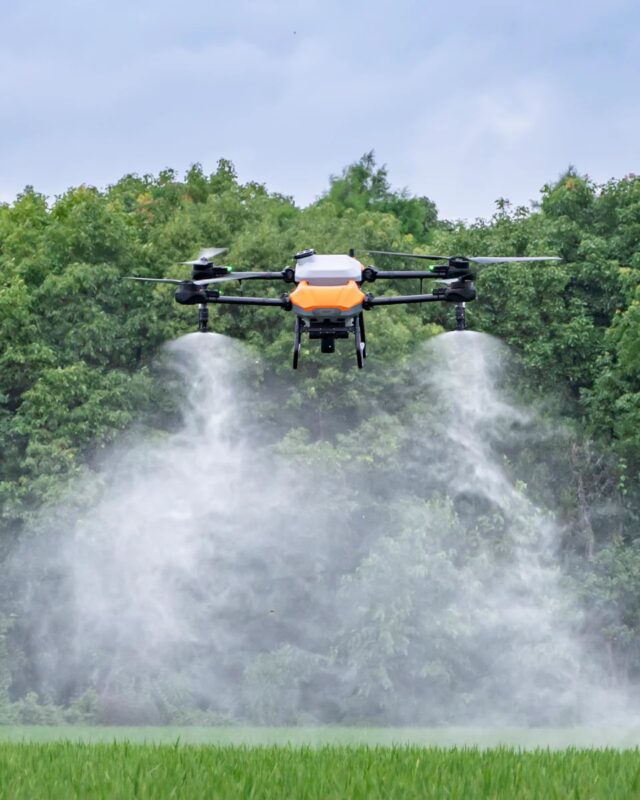
A spraying drone flies directly over the crops and sprays with very high accuracy.
That means:
- less overlap
- less chemical waste
- better crop coverage
- faster spraying
Imagine this for a second.
A farmer wakes up early in the morning. The rice field is wet and muddy after rain. Walking through it would take hours.
Instead, he launches a spraying drone.
The drone flies smoothly across the field in perfect lines, spraying evenly from above.
Within a short time, the work is done.
No heavy lifting. No muddy boots. No wasted spray.
That’s the power of modern agricultural drones.
And companies like DJI Agri Drones are helping farmers adopt these smarter farming systems worldwide.
Can Agricultural Drones Reduce Pesticide Usage?
Yes. Absolutely.
This is actually one of the biggest benefits of precision spraying agriculture.
Traditional spraying often wastes chemicals because:
- too much product is applied
- spray overlaps happen
- wind drift increases waste
- entire fields are treated unnecessarily
Precision spraying drones solve many of these problems.
Because drones use:
- smart GPS guidance
- controlled spray systems
- accurate flight paths
they can reduce chemical usage significantly.
Many farmers report using:
👉 20% to 50% less pesticide
And that matters a lot.
Less pesticide means:
- lower farming costs
- safer working conditions
- healthier crops
- reduced environmental impact
That’s a major reason governments and agricultural experts support precision agriculture technology.
Is Precision Spraying Better Than Traditional Farming Methods?
Honestly, in many situations, yes.
Traditional farming methods still work. Farmers have used them for generations.
But precision spraying offers advantages that are hard to ignore.
Let’s compare them simply.
| Traditional Spraying | Precision Spraying |
|---|---|
| More chemical waste | Less chemical waste |
| Slower coverage | Faster spraying |
| Uneven application | Accurate spraying |
| More labor required | Less labor needed |
| Higher fuel usage | Lower operational cost |
| Crop damage possible | Minimal crop damage |
That doesn’t mean tractors disappear completely.
But precision spraying gives farmers more control and efficiency.
Especially for:
- rice farming
- corn farming
- wheat fields
- vineyards
- orchards
the difference can be huge.
What Crops Benefit Most From Precision Spraying Agriculture?
Some crops benefit even more than others.
Here are some of the biggest examples.
Rice
Rice farming is one of the best uses for spraying drones.
Rice fields are:
- muddy
- difficult to walk through
- large
- time-sensitive
Drones can spray rice fields quickly without damaging crops.
Corn
Corn farms are often very large.
Precision spraying helps farmers:
- cover more acres faster
- target pest areas
- reduce chemical costs
Soybeans
Soybean farmers use precision spraying to improve plant health while reducing over-spraying.
Vineyards
Vineyards require careful spraying between narrow rows.
Drones make this much easier.
Orchards
Fruit orchards also benefit because drones can reach areas difficult for tractors.
Are Precision Spraying Drones Easy to Operate?
This is a question many farmers ask.
And honestly, most people are surprised by the answer.
Modern agricultural drones are much easier to use than older drone systems.
Most advanced drones now include:
- automated flight routes
- GPS navigation
- obstacle detection
- simple touchscreen controls
That means farmers do not need to be technology experts.
Of course, there is still some training involved.
But after learning the basics, many operators become comfortable surprisingly fast.
It’s kind of like learning to drive a modern tractor for the first time. At first it feels new. Then it becomes normal.
What Is the Cost of Precision Spraying Drones?
The cost depends on several things:
- drone size
- tank capacity
- battery systems
- automation features
- spraying technology
Smaller drones cost less.
Large commercial agricultural drones cost more because they are built for serious farm work.
At first, some farmers worry about the investment.
And honestly, that makes sense.
But many farmers later realize precision spraying saves money over time through:
✔ lower labor costs
✔ less pesticide usage
✔ reduced fuel usage
✔ faster farm operations
✔ improved crop yield
That long-term savings often makes the investment worthwhile.
Do Drones Replace Traditional Farming Equipment?
Not completely.
This is important to understand.
Drones are not replacing every tractor or farming machine overnight.
Instead, they work alongside existing equipment.
Think of drones as a powerful additional tool.
For example:
- tractors still help with heavy field preparation
- combines still handle harvesting
- irrigation systems still provide water
But drones improve spraying, monitoring, and crop management.
So instead of replacing farming completely, drones are upgrading farming.
Are Precision Spraying Drones Safe for Crops?
Yes, when used correctly, they are very safe.
In fact, drones often protect crops better than heavy machinery.
Tractors sometimes:
- crush plants
- compact soil
- damage rows during spraying
Drones avoid those problems because they fly above the crops.
That means:
✔ less crop damage
✔ healthier soil
✔ cleaner spraying patterns
Modern drones also use controlled spray systems designed to protect plants while maximizing effectiveness.
The Human Side of Precision Farming
Here’s something people don’t talk about enough.
Precision spraying is not only about technology.
It’s also about helping farmers physically and mentally.
Farming is exhausting work.
Long days. Heat. Chemical exposure. Heavy equipment.
Many farmers are getting older, and younger generations often hesitate to enter farming because of how difficult it can be.
Precision spraying changes that story a little.
Imagine a farmer finishing spraying work in one hour instead of spending the entire day carrying heavy equipment across muddy land.
That matters.
It reduces stress. It saves energy. It makes farming more manageable.
And honestly, that human benefit is just as important as the technology itself.
How Precision Spraying Helps the Environment
This is another major reason precision agriculture is growing.
Traditional over-spraying can lead to:
- water pollution
- soil contamination
- unnecessary chemical exposure
Precision spraying reduces those risks.
Because drones spray more accurately:
- less chemical reaches rivers
- less spray drifts into nearby areas
- fewer resources are wasted
That helps farms become more sustainable over time.
Why More Farmers Are Choosing DJI Agricultural Drones
Farmers want tools they can trust.
That’s why many growers now look at advanced agricultural drone systems from DJI Agri Drones.
These systems are designed specifically for:
- precision spraying
- large farm coverage
- crop monitoring
- efficient field operations
Features often include:
- smart flight planning
- advanced spraying systems
- high-capacity tanks
- reliable GPS control
For modern farms, these technologies are becoming increasingly important.
The Future of Precision Spraying Agriculture
Honestly, we are still early in this farming revolution.
In the future, precision spraying may become even smarter through:
- AI crop detection
- automatic disease recognition
- real-time weather adjustments
- autonomous drone fleets
Imagine drones scanning crops and automatically spraying only infected areas.
That future is getting closer very quickly.
Frequently Asked Questions
How many acres can a drone spray per day in precision agriculture?
A modern agricultural drone can spray between 100 to 400 acres per day depending on conditions and setup.
1. What is the difference between precision spraying and traditional spraying?
Precision spraying targets only specific crop areas using data and technology, while traditional spraying covers the entire field equally.
2. Can precision spraying improve crop yield?
Yes, because crops receive the right amount of nutrients and protection at the right time, leading to healthier growth.
3. Is precision spraying agriculture profitable for farmers?
Yes, it can be very profitable because it reduces input costs and increases productivity over time.
4. What technology is used in precision spraying agriculture?
It uses GPS systems, drones, sensors, AI mapping tools, and automated spraying systems.
5. How accurate is agricultural drone spraying?
Modern drones can achieve very high accuracy with precise flight paths and controlled spray systems.
6. What are the disadvantages of precision spraying agriculture?
The main disadvantages are initial equipment cost, training needs, and maintenance requirements.
7. Is precision spraying environmentally friendly?
Yes, it reduces chemical waste, minimizes soil pollution, and lowers environmental impact.
Final Thoughts
Precision spraying agriculture is changing farming in ways that seemed impossible just a few years ago.
Farmers are no longer forced to spray entire fields blindly or spend endless hours doing difficult manual work.
Now they can spray smarter.
With agricultural drones, farms become:
- faster
- more efficient
- more accurate
- less wasteful
And honestly, that’s good for everyone.
Better crops. Lower costs. Less environmental damage. Less physical strain on farmers.
That’s why precision spraying agriculture is quickly becoming one of the most important tools in modern farming today.
And with advanced systems from DJI Agri Drones, the future of smart farming is already here.