
🚁 How Crop Spraying Drones Work (Simple Guide for Farmers in 2026)
How Crop Spraying Drones Work
If you’ve ever stood in a big farm field early in the morning, you already know something.
Farming is not easy.
The sun comes up, the work starts, and there is always something that needs to be sprayed—fertilizer, pesticide, herbicide… the list goes on.
Now imagine something different.
Instead of walking for hours in the field or driving heavy machines, you just press a button and a drone flies out above your crops and does the spraying for you.
Sounds like something from the future, right?
But here’s the thing… it’s already happening today.
This is exactly what crop spraying drones do. And at DJI Agri Drones, this kind of farming technology is becoming more common for farmers around the world.
Let’s break it down in a simple way.
No complicated words. No confusing tech talk. Just real, easy understanding.
🌾 First, What Is a Crop Spraying Drone?
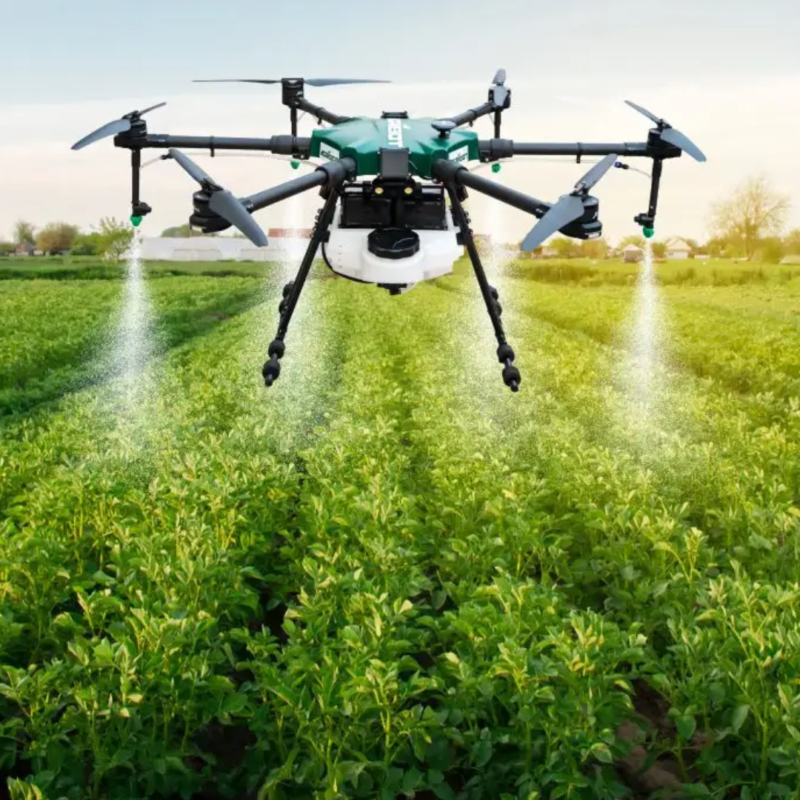
A crop spraying drone is a flying machine made for farming.
It carries a liquid tank filled with:
- fertilizer
- pesticide
- herbicide
- or plant nutrients
Then it flies over crops and sprays them evenly from above.
You don’t need to walk behind it.
You don’t need to drive a tractor.
You just control it from the ground.
Simple.
🚁 Why Farmers Are Using Drones Now
Let’s be honest.
Traditional spraying is hard work.
You need:
- time
- energy
- workers
- fuel
- and a lot of effort
And even after all that, the spray is not always even.
Some areas get too much. Some get too little.
Now imagine this instead:
A drone flies in straight lines over your field and sprays everything perfectly.
That’s why farmers are switching.
It saves time. It saves money. And it reduces stress.
🌱 How Crop Spraying Drones Actually Work (Step by Step)
Let’s go step by step so it’s super easy to understand.
1. The farmer prepares the drone
First, the farmer fills the drone tank with liquid.
This could be:
- pesticide to kill insects
- fertilizer to help crops grow
- weed control chemicals
Then the batteries are checked and charged.
2. The field is mapped
Here’s something interesting.
Modern drones don’t just fly randomly.
They follow a map.
The farmer uses a controller or app to mark:
- field boundaries
- spray area
- flight path
It’s like drawing a box on a screen.
3. The drone takes off
Once everything is ready, the drone lifts off.
It doesn’t need a runway.
It just rises straight into the air.
Smooth and quiet.
4. It flies over crops automatically
Now the smart part begins.
The drone:
- follows GPS directions
- flies in straight lines
- keeps the same height
- moves evenly across the field
It’s like a robot farmer in the sky.
5. Spraying begins
Under the drone, there are special nozzles.
These nozzles spray liquid in a fine mist.
The drone makes sure:
- every part of the field is covered
- no area is missed
- spraying is even
This is very important for crop health.
6. It returns and refills
When the tank is empty or battery is low, the drone returns automatically.
The farmer:
- refills liquid
- changes battery
- sends it back again
The process repeats until the whole field is done.
🌾 Why This Method Works So Well
Now let’s talk about why this system is powerful.
Because it’s not just about flying.
It’s about precision.
✔ Even spraying
No more guesswork.
Every part of the field gets the same amount.
✔ Less chemical waste
Farmers don’t overuse fertilizer anymore.
That saves money.
✔ Faster work
What used to take hours or days can now take a fraction of the time.
✔ Works in difficult fields
Rice fields, muddy land, and wet soil are no problem.
The drone flies above everything.
✔ Less human effort
Farmers don’t need to walk long distances in harsh conditions anymore.
🚜 A Simple Real-Life Story
Let’s make this real.
Imagine a farmer named Daniel.
He has a rice farm that his family has worked on for years.
Every season, spraying was always the hardest part.
He had to:
- wake up early
- walk through wet fields
- carry heavy equipment
- spend the whole day spraying
It was exhausting.
One day, he tries a crop spraying drone.
At first, he is unsure.
He thinks, “Can this really replace my hard work?”
But he tries it anyway.
The drone takes off.
It flies slowly over the rice field, moving in perfect lines.
Within a short time, a large part of the farm is already done.
Daniel just stands there quietly.
Then he smiles.
Because he realizes something important.
Farming just got easier.
⚙️ Main Parts of a Crop Spraying Drone
Let’s quickly look at what makes these drones work.
1. Tank system
Holds liquid fertilizer or pesticide.
2. Spraying nozzles
Spread liquid evenly over crops.
3. GPS system
Helps the drone follow exact routes.
4. Motors and propellers
Keep the drone stable in the air.
5. Battery system
Provides power for flight and spraying.
6. Controller or app
Used by the farmer to guide the drone.
🌍 Where This Technology Is Used
Crop spraying drones are now used in:
- rice farming
- wheat farms
- corn fields
- sugarcane farms
- large commercial agriculture
And the demand is growing fast in Africa, Europe, Asia, and the Americas.
At DJI Agri Drones, this technology is helping farmers move toward smarter farming systems.
💰 Are Crop Spraying Drones Worth It?
This is a question many farmers ask.
The simple answer is yes—but let’s explain why.
They help farmers:
- reduce labor costs
- save fuel
- use less chemicals
- increase crop yield
- finish work faster
So even if the drone costs money at the start, it often pays back over time.
Because it saves more than it costs.
🧠 Common Mistakes Farmers Make
Let’s keep it real.
Some people use drones wrong at first.
Here are mistakes to avoid:
❌ Flying without planning
Always map the field first.
❌ Using too much liquid
Drones are precise—no need to overdo it.
❌ Ignoring weather
Wind can affect spraying.
❌ Not maintaining the drone
Clean equipment lasts longer.
🚁 Future of Crop Spraying Drones
Here’s where things are heading:
- drones that scan crops automatically
- AI systems that detect plant disease
- fully automated farm spraying
- multiple drones working together
- smart farming apps connected to drones
In the future, farmers may not even need to manually fly drones at all.
They might just set a schedule and let everything run automatically.
🔗Useful Links
- Homepage: DJI Agri Drones
- Category Page: https://djiagridrones.com/sample-page/
- FAQ Page: Drone Farming FAQs
- About Page: About DJI Agri Drones
❓ Frequently Asked Questions
1. How do crop spraying drones work?
They fly over fields using GPS and spray liquid fertilizer or pesticide evenly using nozzles.
2. Are crop spraying drones better than manual spraying?
Yes. They are faster, more accurate, and reduce physical labor.
3. How many acres can a drone spray in a day?
Most agricultural drones can cover large farms in a single day depending on battery and tank size.
4. Can drones be used in rice farming?
Yes. Rice fields are one of the best uses for spraying drones because they are wet and hard to walk through.
5. Do farmers need training to use drones?
Yes. Basic training is needed to operate them safely and correctly.
6. Are crop spraying drones expensive?
They can be expensive at first, but they often save money long-term by reducing labor and chemical costs.
🌱 Final Thoughts
Crop spraying drones are changing farming in a big way.
They are not just machines.
They are tools that help farmers:
- work faster
- reduce stress
- improve crop health
- and save money
And as technology grows, farming will only become smarter and easier.
At DJI Agri Drones, this future of agriculture is already taking shape today.
If you’re a farmer or someone interested in modern agriculture, this is one technology worth paying attention to.
Because honestly…
This is just the beginning.